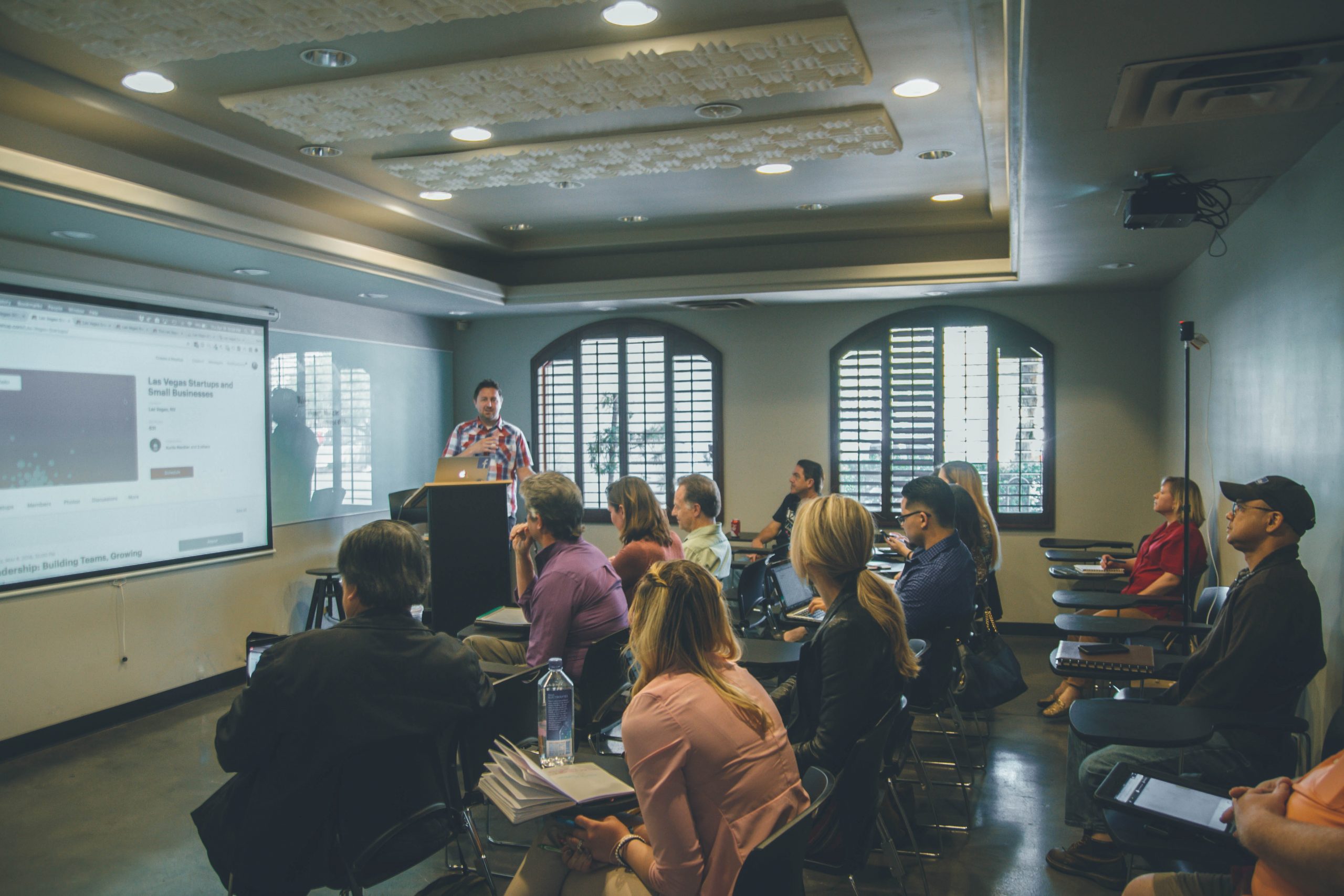
Public Speaking for Teachers

Public speaking, it is commonly said, is one of the most pervasive fears (in some surveys, second only to death). It is estimated that 75% of all people suffer from fear of public speaking. In teacher training, speaking skills are rarely taught in any formal sense, which may increase anxiety. Yet public speaking is one of the most important skills for teachers hence a skill which is commonly tested—from classes to formal presentations in staff meetings. 

Below are a list of great websites with hints and tips for teachers and school leadership along with some of my own advice when presenting to students or staff in a school setting. 

https://speakwellacademy.com/why-is-public-speaking-important-for-teachers/

You might also enjoy

How often do you teach from the back of the classroom?

It started with a simple LinkedIn post asking: How often do you teach from the back of the classroom? Almost 70,000 views and hundreds of comments later, it was clear that something about this simple question had struck a chord with teachers.

After spending a lot of time visiting classrooms this year, I had started noticing teachers deliberately using different parts of the room. Some were teaching from the back, others were sitting amongst students during presentations, while some moved away from the whiteboard when they wanted the information, rather than themselves, to be the focus.

Then I caught myself doing exactly the same thing in my own Year 7 Religious Education class. It made me wonder whether where we position ourselves actually matters. It turns out there is research behind it. This article explores classroom space, teacher movement, laptops and AI, and asks a simple question: where is the best place to stand when you teach?

Literacy Isn’t an English Problem. It’s a Leadership Opportunity.

One of the biggest shifts has been changing the conversation from “Literacy is the responsibility of the English faculty” to “Every teacher is a teacher of literacy.” Every subject has its own language, vocabulary and ways of thinking. Whether students are analysing historical sources, interpreting scientific texts or unpacking complex mathematical word problems, literacy is fundamental to success.

That philosophy has shaped many of the initiatives we’ve introduced across the College.

At John Paul College, literacy is now embedded within our Annual Action Plan and School Improvement Plan. It isn’t viewed as an initiative that sits alongside teaching and learning. It is a strategic priority that informs curriculum design, professional learning, intervention, instructional practice and faculty planning. This whole school approach has created the conditions for literacy improvement to become sustainable rather than dependent on individual champions.

Book Review: Elevated Conversations

There are few things more familiar in schools than collaborative time that begins with good intentions but does not quite lead anywhere. Meetings happen, discussion takes place, yet it can feel as though the real work never quite gets done. Elevated Conversations by Simon Breakspear tackles this challenge in a practical and realistic way.

One of the strengths of the book is how clearly Breakspear describes what many educators experience but rarely name. He refers to “weary talk”, conversations that go around in circles, where some voices dominate, others disengage, and time runs out before anything meaningful shifts. This is not framed as a problem with people, but as a problem of structure. Bringing people together is not enough on its own. Good collaboration needs to be designed.